
Story
A digital backbone
Today’s factories use thousands of sensors to find ways of improving every task on every production line. This generates a mountain of data – and manufacturers are exploring cutting-edge digital platforms with the power to analyze this data in real time. By offering fresh insights into potential efficiency improvements, these systems are giving companies a strong digital backbone.
Minimum input, maximum output
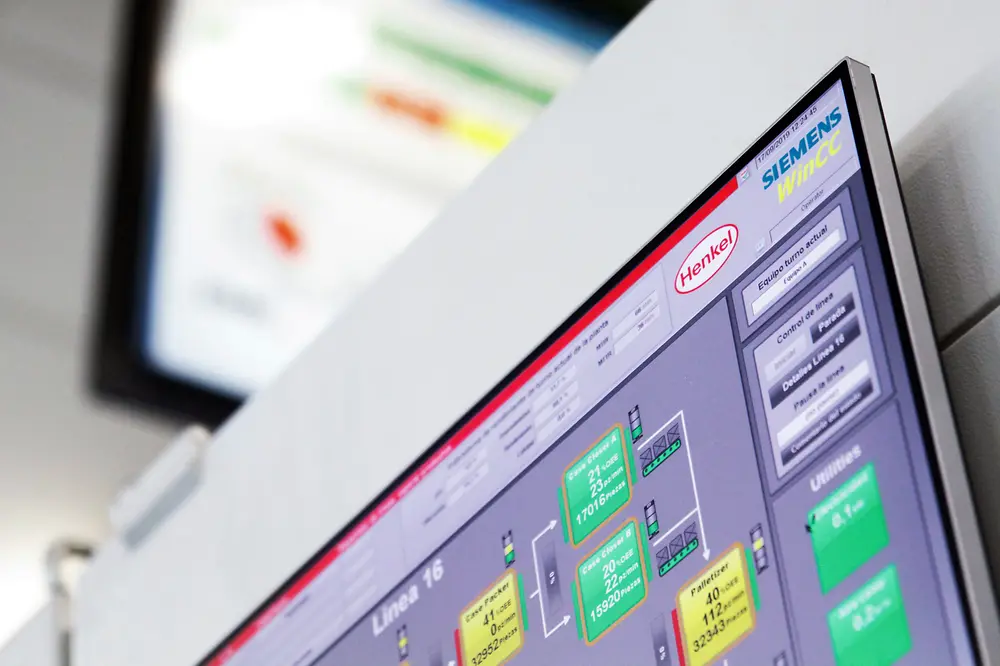
Everybody wants more. And they also want less. More quality and productivity, with less waste and a smaller environmental footprint. This paradox is at the heart of a growing trend for state-of-the-art solutions that revolutionize the way companies are run. These digital backbones collect data from production sites around the world, as well as from every stage in the value chain. Local data is standardized and entered into global web-based interfaces, where it’s analyzed in real time. And this is then used to create charts and graphics that offer production workers valuable insights into how to improve quality and efficiency.
These new tools represent a giant step forward compared to previous systems that simply measured energy consumption in the same way as the meter you’d find in a typical house. Modern technology makes it possible to track and trace resources at all times, which gives manufacturers like Henkel the information we need to make our processes safer, more flexible and more efficient. On top of this, data from our planning tools is integrated into the digital backbone, which enables our production teams to adapt to changes in demand as soon as they occur – and make sure our products are always available when customers want them.
Increasing production line efficiency
Where does this data come from? It comes from everywhere. Our digital backbone collects and analyzes data from every individual process step on every single machine on every production line – from mixing ingredients through to preparing the final product for transportation. This is impressive because production lines are often incredibly complex: A line for filling bottles with our liquid detergents, for example, can involve 10 different machines that cover everything from putting bottles upright through to filling them with detergent, screwing the cap on and applying a label. Lines operate at high speed, aiming to fill up to 300 bottles per minute, and often run 24 hours a day, seven days a week. As a result of this complexity and speed, filling lines are a source for production bottlenecks.
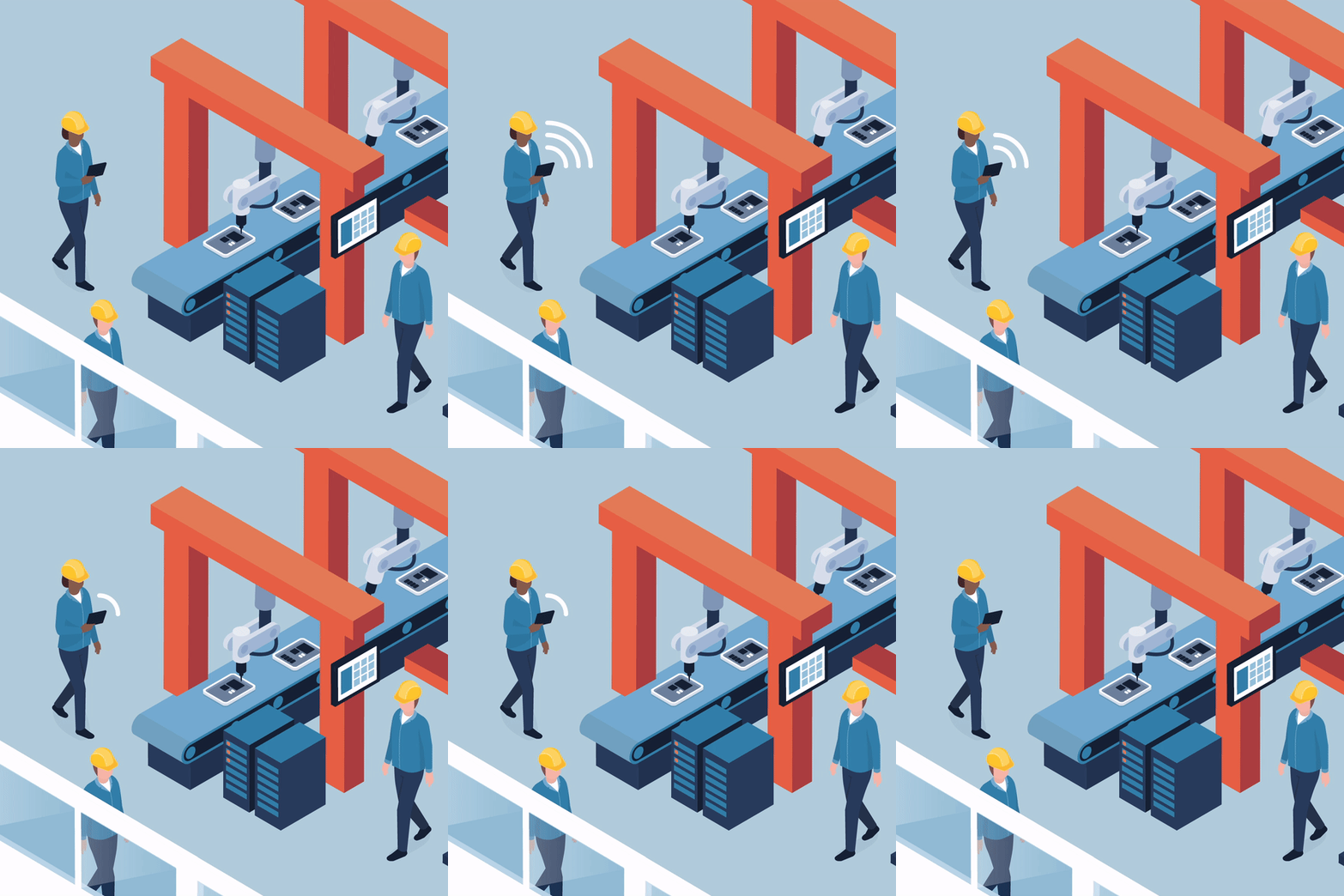
To maximize efficiency, our machines are fitted with sensors and micro-cameras that monitor every action they perform. Our digital backbone analyzes data from these inputs in real time, while also consolidating and storing everything in a cloud-based archive. Insights from this data enable our production teams to identify malfunctions – like valve defects or weight sensor errors – at an early stage. In fact, if one machine on the line has a problem, the others slow down until it’s fixed. Less energy is required to run a production line slowly than to turn it off and start it up again. And this drastically reduces downtime, which is important because a standstill can cost thousands of euros per shift.
Contributing to more sustainable manufacturing
At Henkel, our digital backbone also contributes to sustainability by measuring resource consumption in real time. We’ve set ourselves ambitious goals for reducing the amount of energy and water we use to make our products. If our system shows that our consumption per ton of product is increasing, it might indicate that one of the many pipes that carry steam and water around our site has a leak. Automatic notifications alert our employees if a machine is consuming more energy or water than the company’s benchmark level. This early warning function enables our teams to take immediate action, and creates global transparency about our sustainability performance.
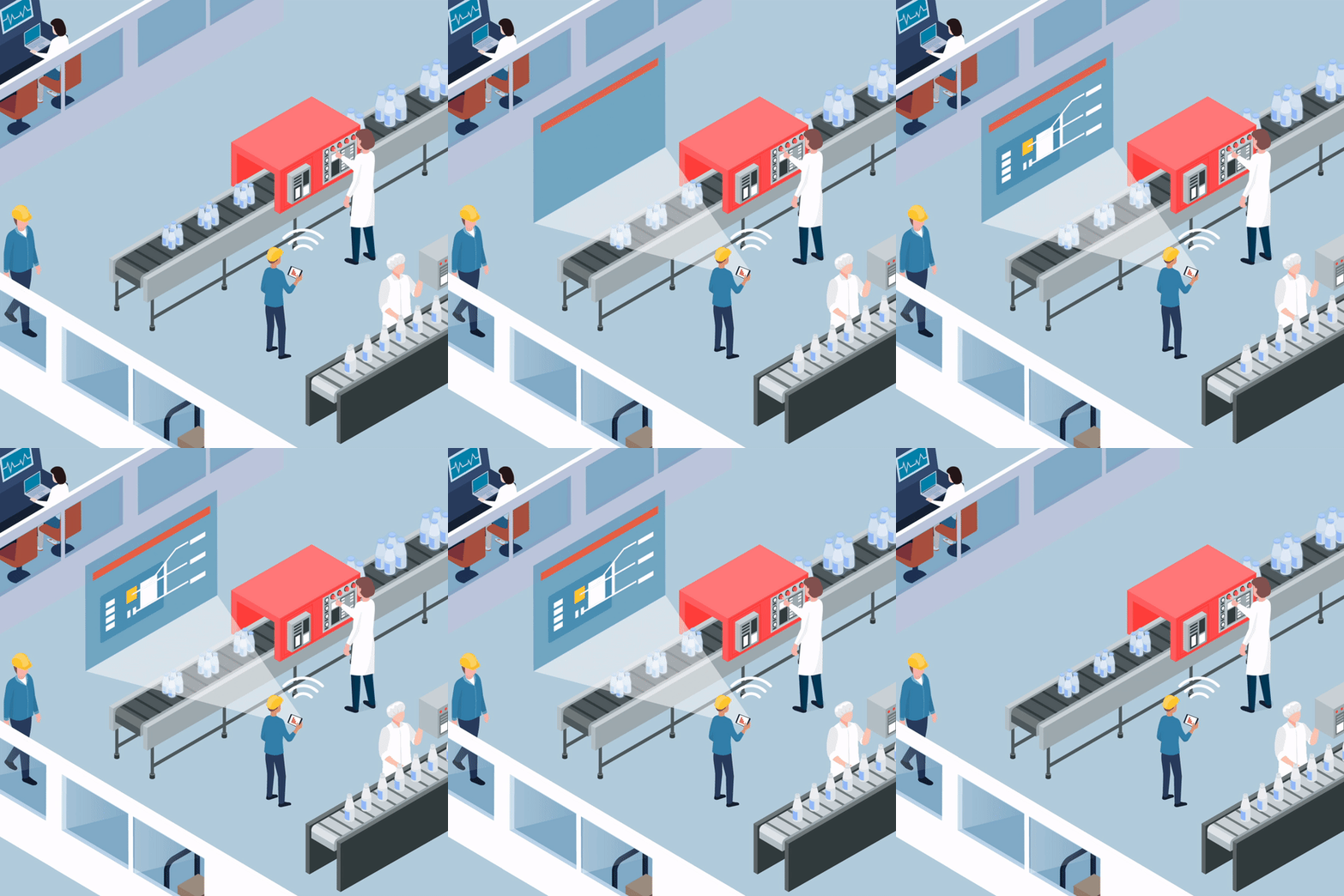
It’s even possible to make progress toward the futuristic vision of a paperless factory by replacing documentation with electronic processes that are coordinated within our digital backbone. Quality documentation across our sites, for example, has been replaced by apps where employees simply enter values into a tablet computer. Going paperless unlocks significant financial savings, frees up time for our employees and drives progress toward sustainability.
Keeping people safe and upskilling the workforce
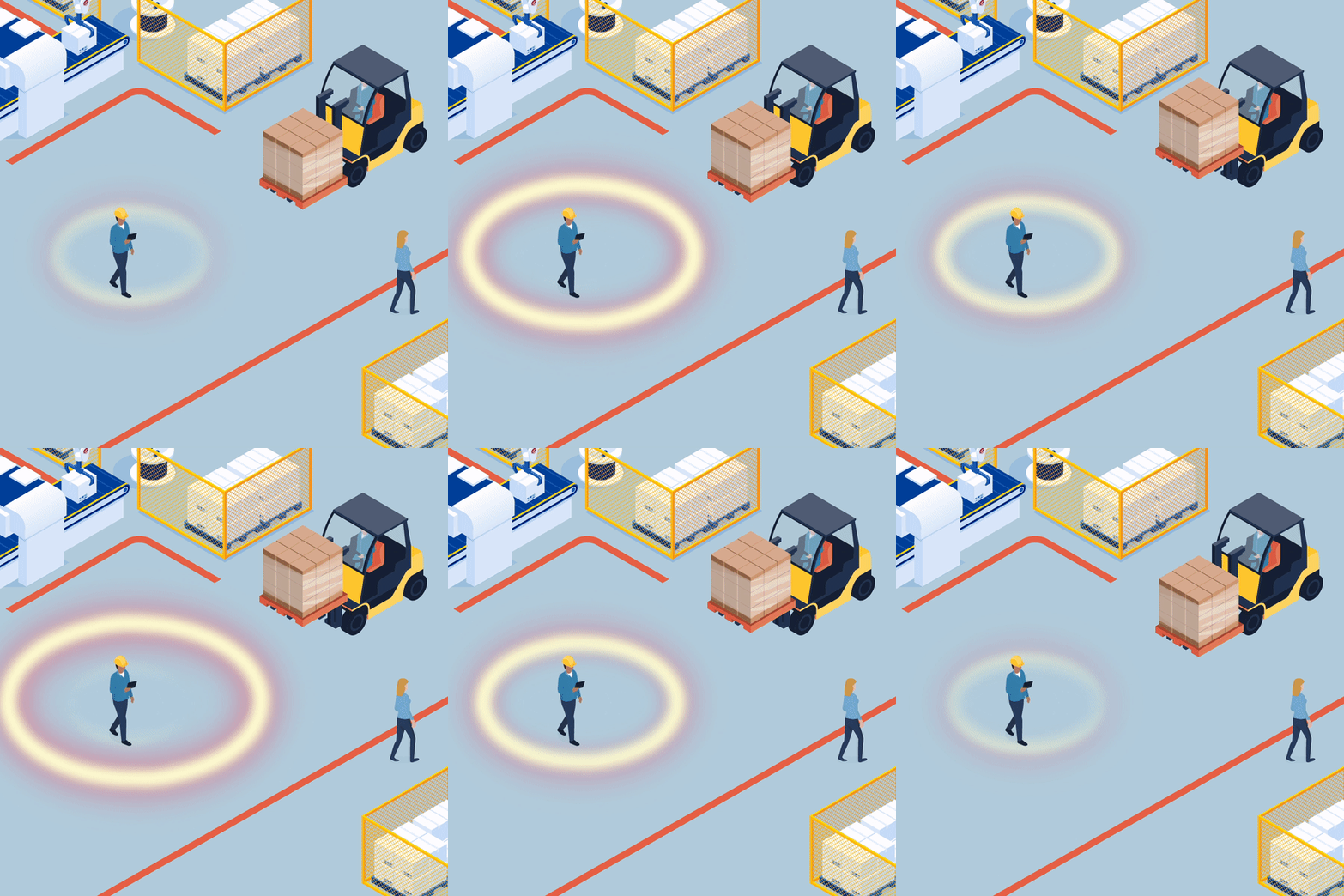
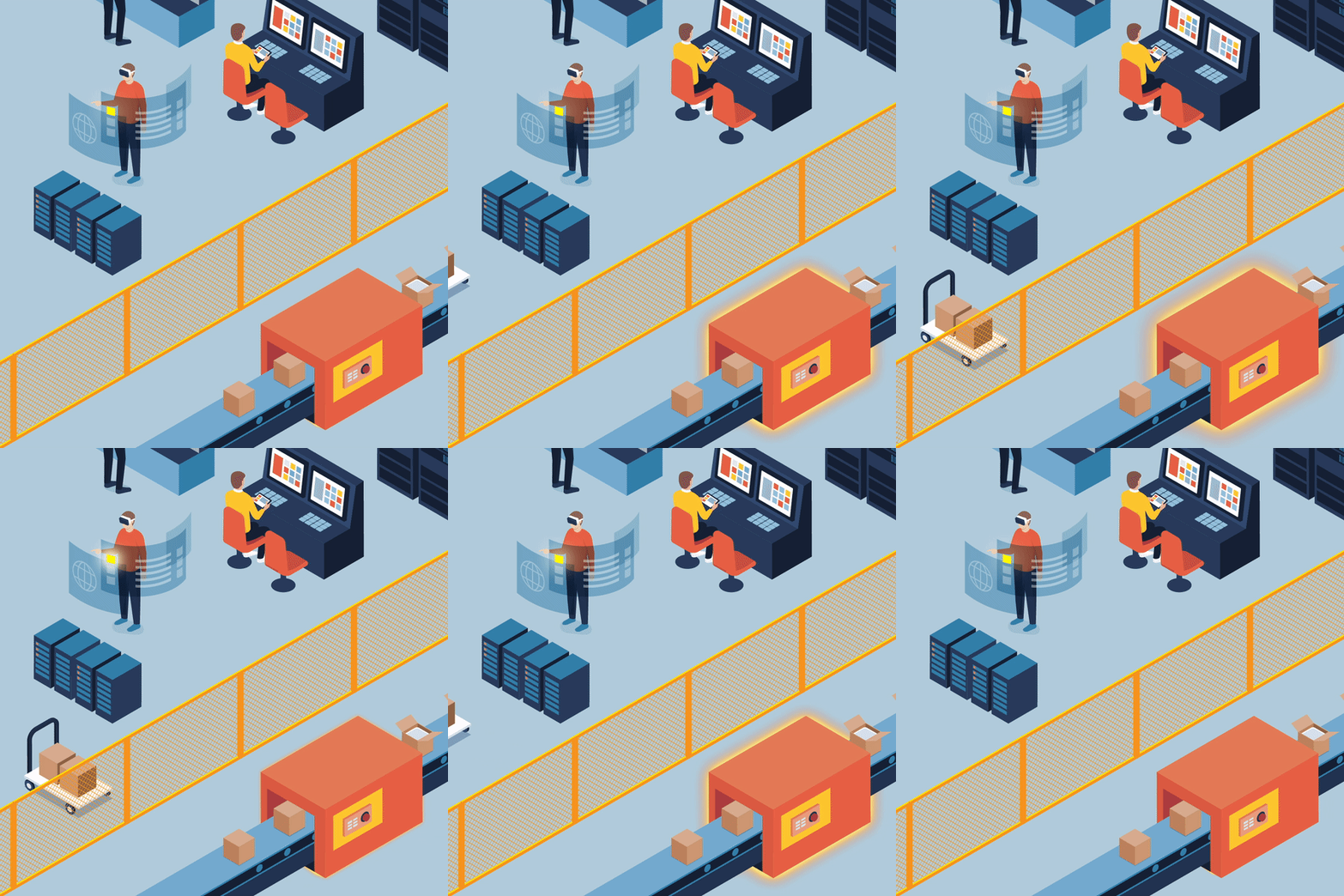
Automation and digitalization also help us to keep our workers safe. For example, advanced technologies are used to prevent accidents involving fork lift trucks across our factories. An electronic warning zone, supported by the digital backbone, is created when everybody on site wears a badge that sends a signal to the forklift. These badges automatically tell the truck to stop when an employee comes within a certain distance. Similarly, modern technology increases safety by improving processes for avoiding potentially harmful substances in the air. These substances used to be measured by taking samples from filters and sending them to be analyzed in a lab. However, digital tools now monitor these values in real time, which means there’s no longer a delay between taking the sample and receiving a result.
Of course, a strong digital backbone relies on people power. That’s why we’re upskilling our employees and empowering them to bring our digital backbone to life. More than 1,800 of our people now have access to our digital backbone, which we began introducing in 2014. It connects almost 4,000 sensors across 33 of our factories and warehouses around the world, and has already helped us to achieve annual cost improvements in the double-digit million euros range. For the future, our vision is for all data from across our entire value chain to be connected in real time. This will put us in an even stronger position to increase quality, efficiency and sustainability – and create more, with less.


